About Salley Mavor
“My aim is to breathe life and emotion into embroidery, an art form that is often perceived as purely decorative.”
Salley mavor
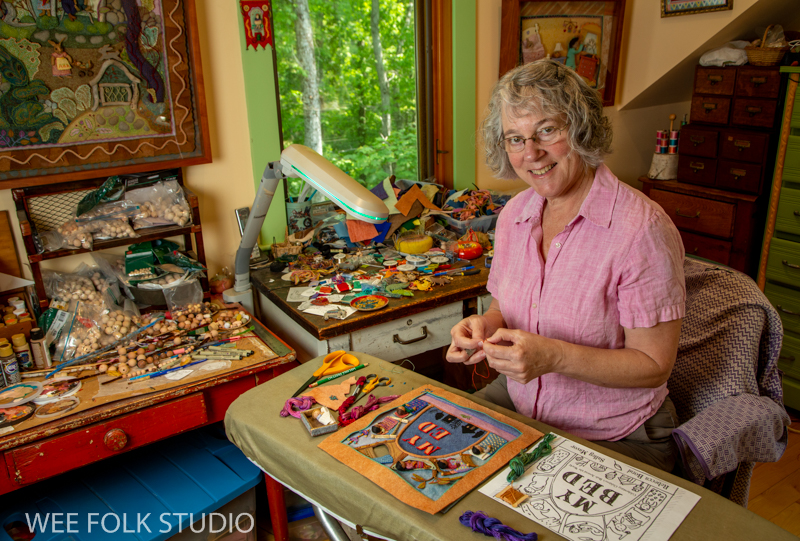
A needle is my tool, thread is my medium and stitches are my marks. For over 45 years, I’ve created 3-dimensional hand-stitched miniature worlds that range from precious to poignant to provocative. My art serves a variety of purposes: it appears as illustrations in children’s books, stand-alone framed artwork, and stop-motion animation.

There is a distinctive over-the-top quality to my art that stands outside of the mainstream. A combination of storytelling imagery, innovative techniques, fervent craftsmanship, and the interplay of familiar, yet intriguing materials set it apart.

While I take delight in every careful stitch, it is the spirit of play and the pursuit of a broader visual narrative that propels my work forward. My objective is to move beyond the confines of embroidery as a medium and create art that is valued for its message and emotional resonance as well as its workmanship.
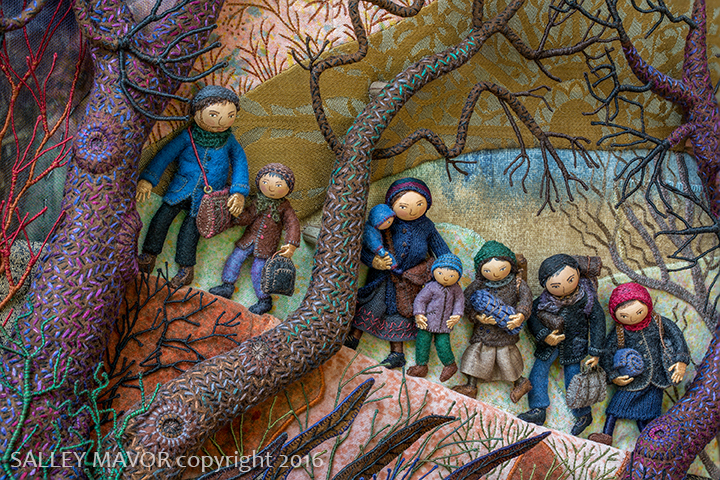
The art I make and the driving force behind it stem from a lifelong, insatiable desire to invent and make things with my hands. This deep love for the tactile process has always been central to my creative approach, shaping everything I have done from childhood through to the present day. My wish is for people of all ages to connect with my art in personal and meaningful ways.

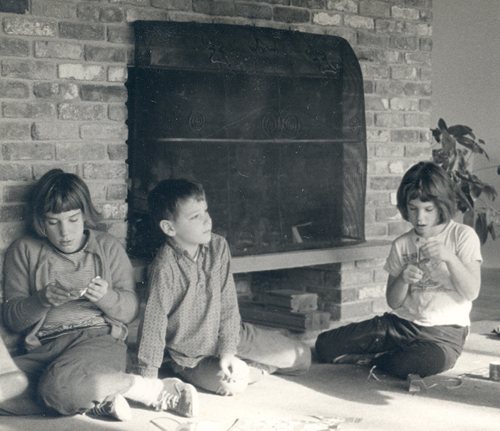
Where did this doll-infested needle and thread universe come from? It began at the height of the baby boom, in a family of introverts who were either making things or staring into space. You could say that we excelled at parallel play.
Education
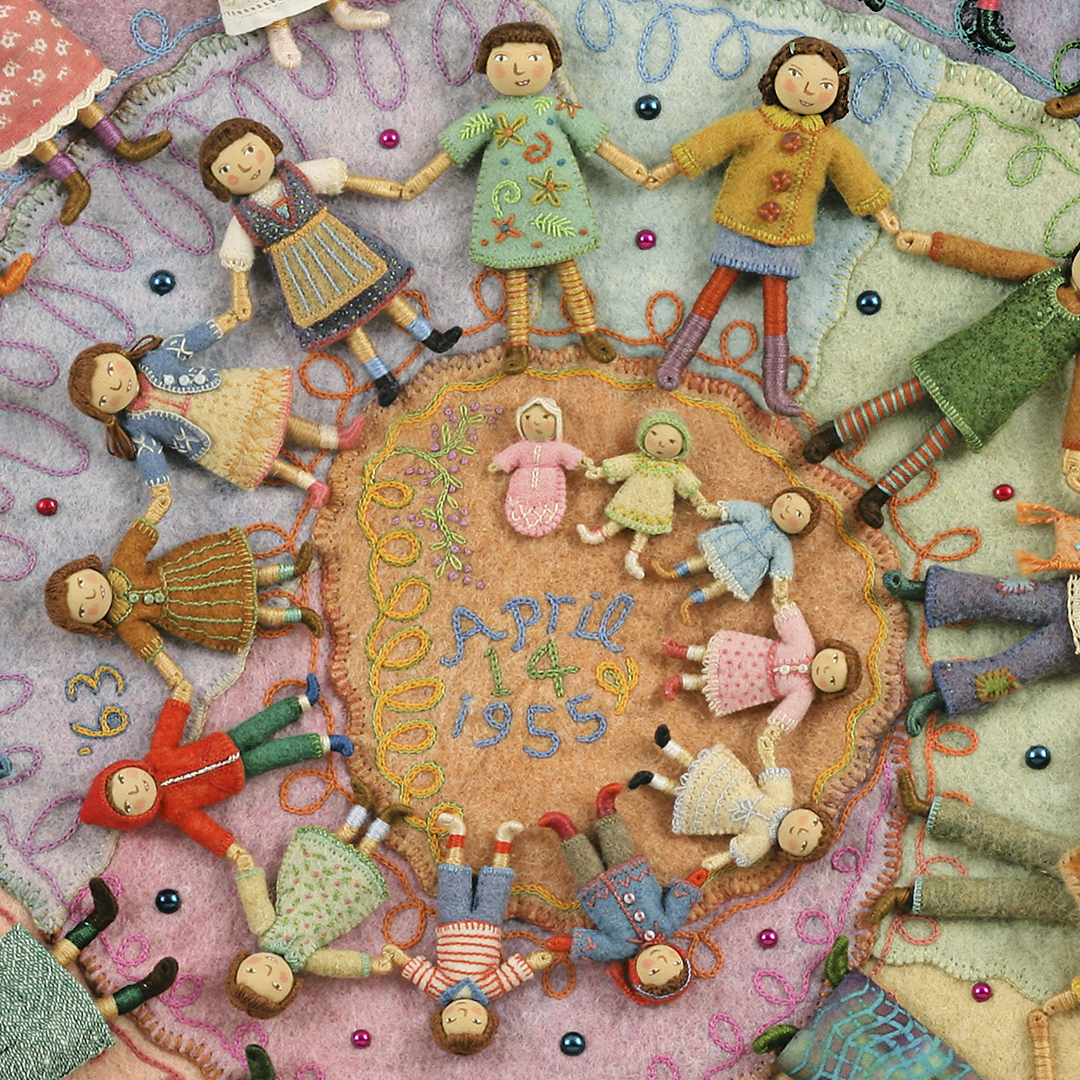
While studying illustration at the Rhode Island School of Design in the 1970’s, an insightful teacher encouraged me to tap into my crafty and playful side. This newfound sense of freedom felt exhilarating—an organic, joyful expression straight from the heart. No longer confined to traditional art mediums, I discovered that working with stitching and soft sculpture allowed my ideas to come alive in new and unexpected ways. For most of my career I have followed this path, creating stitched scenes in bas-relief, much like miniature, shallow stage sets, with figures imposed on embellished fabric backgrounds.

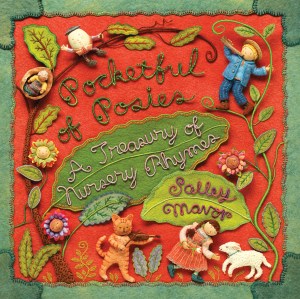
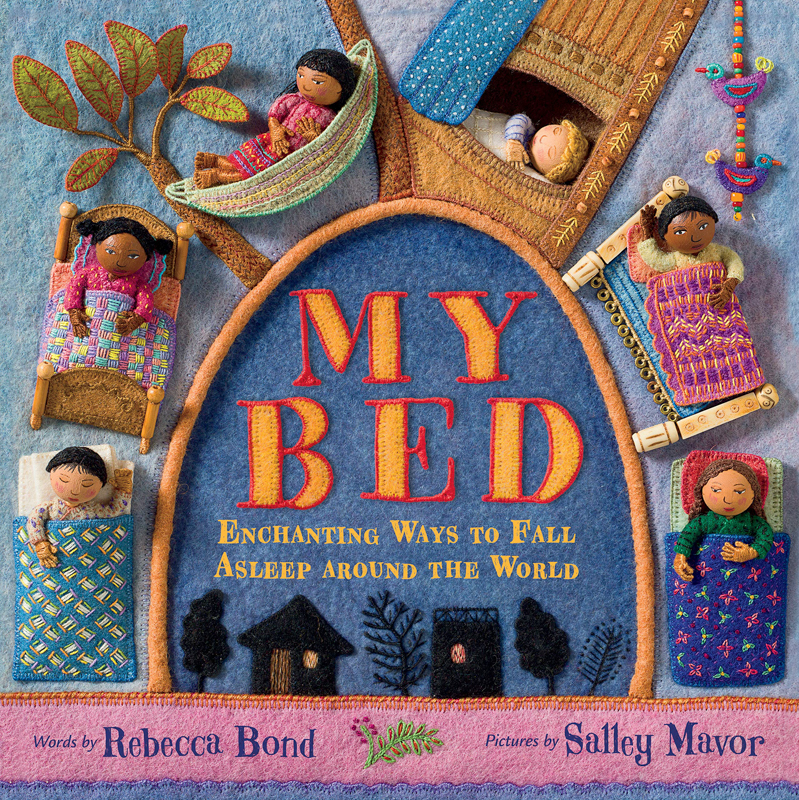
Books – My 3-dimensional artwork is photographed and reproduced in children’s books, including the 2010 award-winning Pocketful of Posies: A Treasury of Nursery Rhymes and My Bed: Enchanting Ways to Fall Asleep Around the World. My bestselling how-to book of doll projects, Felt Wee Folk: New Adventures continues to inspire creativity.
Shop – Personally autographed books, cards, jigsaw puzzles, notebooks, and posters with printed reproductions of my embroidered scenes are available in my Etsy Shop.

Sale of Original Artwork – My original pieces are no longer available for sale. I have made the decision to retain all works currently in my possession. By holding on to these pieces, I am ensuring that there is a well-rounded and representative body of work ready for exhibition purposes. This way, I can maintain a collection that accurately reflects my artistic vision and creative journey. Printed reproductions of my work are available in my Esty Shop.
Sharing Knowledge – I do not teach classes. However, this blog is full of informative and inspiring photos, videos, and descriptions of projects I’ve made. My how-to book Felt Wee Folk provides step-by-step instructions for making wee folk dolls, with many examples and patterns. To learn my personal philosophy about sharing knowledge and artistic privacy, please read this post: Teaching Dilemma.
Animation
After the 2016 presidential election, I formed a satirical wee folk drama troupe, The Wee Folk Players (they’re a stitch). Also, my husband Rob Goldsborough and I made a short stop-motion animated film titled Liberty and Justice: A Cautionary Tale in the Land of the Free.

My solo exhibit Liberty and Justice was abruptly cancelled in 2018 at its original venue due to its political content. The show was generously picked up by the New England Quilt Museum and the Cotuit Center for the Arts, and portions were included in The Art of Cute at the Brick Store Museum in Kennebunk, Maine. You can watch my interview about the Liberty and Justice exhibit on WGBH TV and read the post Finding My Voice, which includes an excerpt of my talk about making art that is both precious and provocative.
EXHIBITIONS
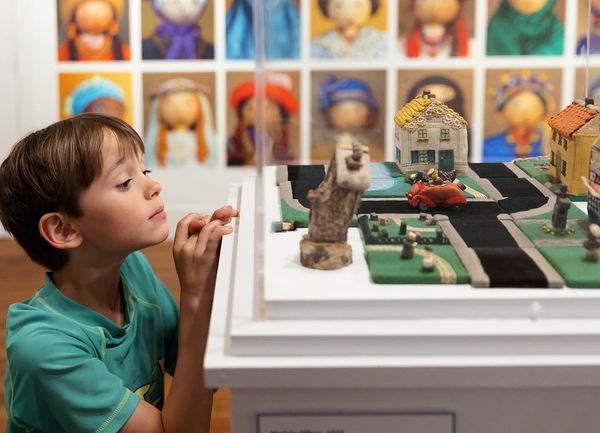
To see a schedule of current and upcoming exhibitions of my original bas-relief artwork, including the Bedtime Stitches national tour, please visit the Exhibitions Page.
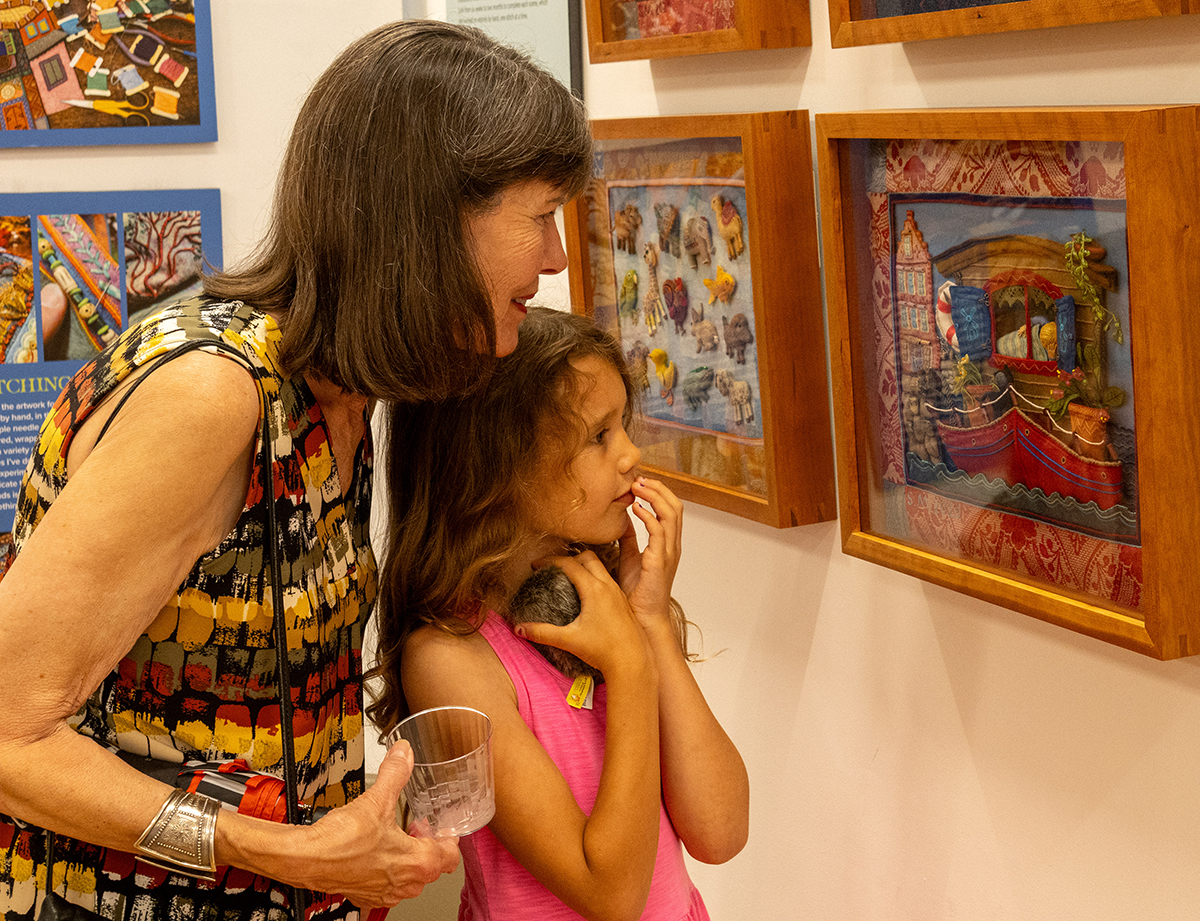
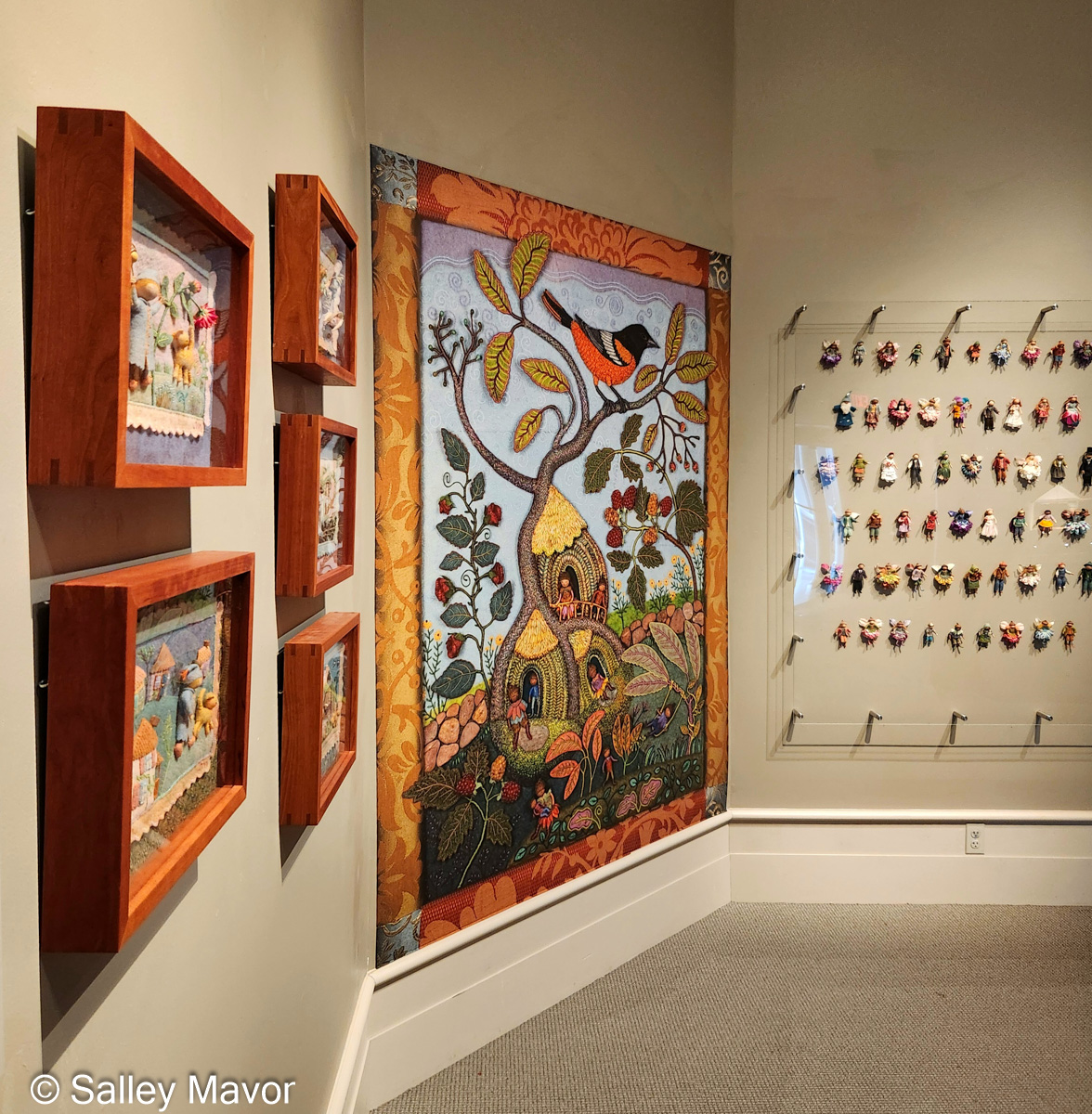
My most recent book, MY BED: Enchanting Ways to Fall Asleep around the World was published in 2020. You can see blog posts showing the book’s progress here. SALLEY MAVOR: Bedtime Stitches, the touring exhibition of original bas-relief artwork for the book is scheduled into 2027. The current list of venues is here. Inquiries from museums are welcome. For information about hosting the show, please use the contact form below.
See how I made the illustrations for my new picture book, MY BED in this 8-minute documentary.
I live and work on Cape Cod, in Falmouth, Massachusetts. For answers to frequently asked question, please go to the FAQ Page. Contact me using the form below or write to P.O. Box 152, Woods Hole, MA 02543.


Autographed books, prints, puzzles, cards, notebooks and posters are available in my Etsy shop.


- Social Media: Follow me at BlueSky, Facebook and Instagram.
- Shop: Autographed books, posters, puzzles, notebooks and cards are available in my Etsy shop.
- Contact me via the form above or write to P.O. Box 152, Woods Hole, MA 02543
PODCASTS:
- The Object Itself Podcast : Salley Mavor shares the inspiration and process behind her Self Portrait: A Personal History of Fashion. Published 1/23/25
- NeedleXChange PODCAST: Salley Mavor – Telling Wee Folk Tales PART 1 and PART 2. Recorded 11/8/24
- School of Stitched Textiles PODCAST: Textile Talk with Salley Mavor. Recorded 9/26/24.
- Creative Exchange PODCAST with the Arts Foundation of Cape Cod. Staying True to Yourself and Your Work with Salley Mavor. Recorded 1/6/23
- Craft Industry Alliance PODCAST with Mimi Kirchner and Salley Mavor. Recorded 6/1/15
INTERVIEWS
- Watch TEXTILE TALK: Textiles in 3D with Salley Mavor, Barbara Schneider, and Jean Sredl, presented by SAQA. Recorded 5/29/24.
- Read an interview with the Embroiderer’s Guild of America
- Read this interview to find out about my foray into political satire
- Read my thoughts about artistic privacy and when to tell how and when not to.
- Watch WGBH OPEN STUDIO interview
- Read my acceptance speech for the 2011 Boston Globe-Horn Book Award
- Read an interview with Create Whimsy
- Read an interview with Seven Impossible Things Before Breakfast
- Watch a 2016 Interview with Falmouth Community TV
Book trailer for Felt Wee Folk – New Adventures
Information
- Autographed books, posters, cards and jigsaw puzzles are available in my Etsy shop.
- To see a list of all of my books, go to My Books.
- Watch videos about my work: Videos Page
- For info about exhibits of my original work, visit the Exhibitions Page.
- Frequently asked questions: FAQ Page
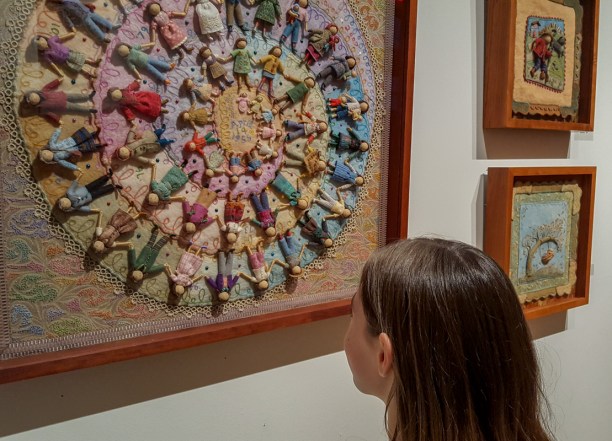
Self Portrait: A Personal History of Fashion (pictured below) is on semi-permanent display at the Woods Hole Public Library. Posters of the piece are available in my Shop here.
To keep up with new posts, please subscribe to this blog. If you’d like to see more frequent photos tracking the projects in my studio, please follow me on Facebook, Instagram and Blue Sky.
 SALLEY MAVOR